
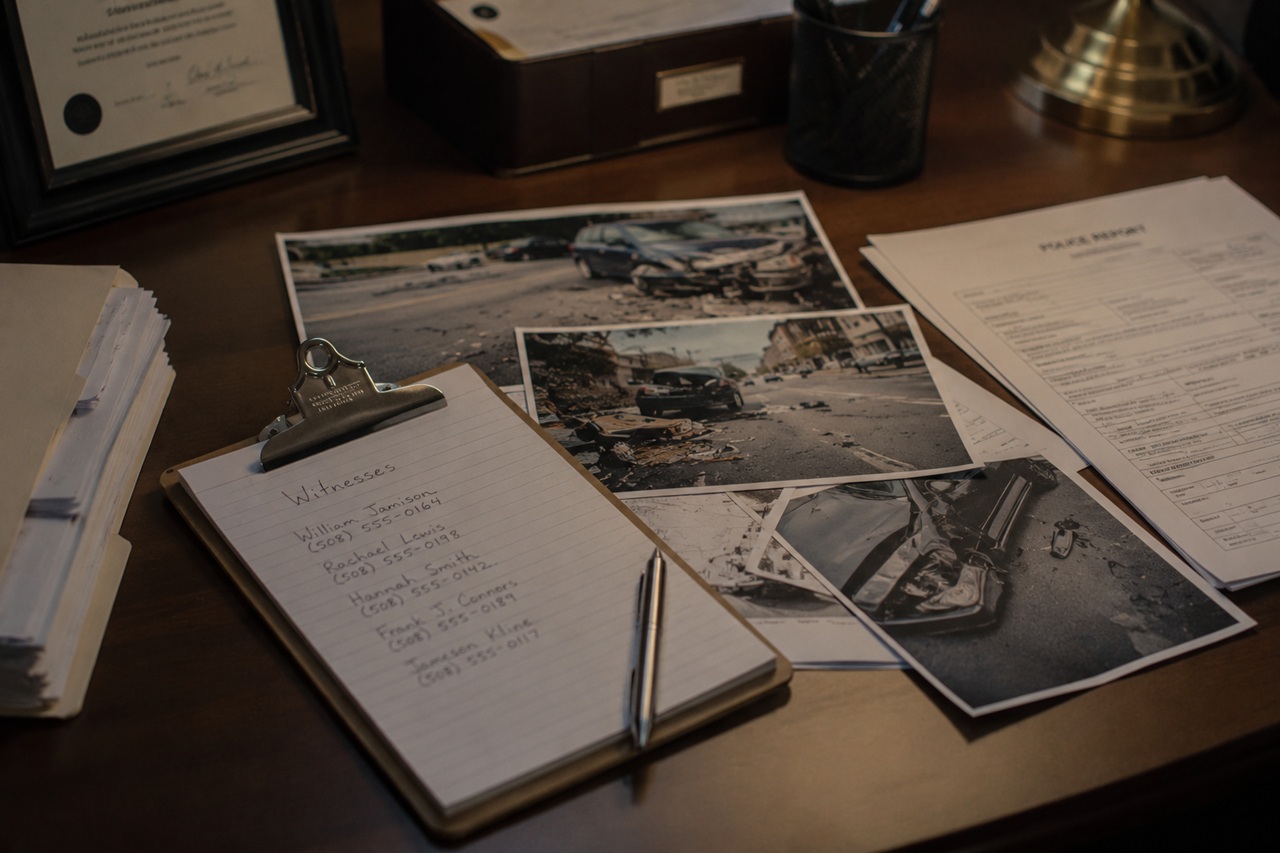
Independent Witnesses Can Become Critical Evidence After A Serious Accident
The seconds after a serious accident are chaotic, painful, and disorienting. Drivers are shaken. Injuries are being assessed. Somewhere nearby, people who saw exactly what happened are checking their watches, thinking about where they need to be, and deciding whether to stay. Those bystanders may not realize it, but what they witnessed could become some of the most important evidence in an injury case.
Insurance companies move quickly after accidents, dispatching adjusters and investigators to gather information that supports their version of events. A Fort Wayne personal injury attorney who has handled serious accident cases knows that independent witness accounts are often one of the strongest tools available to counter that narrative, and that the window to secure them closes faster than most people expect.
What Makes A Witness Statement Valuable In An Indiana Injury Case?
Not every witness account carries equal weight in an Indiana personal injury case. Courts, juries, and insurance adjusters all evaluate witness testimony through the lens of credibility, and certain qualities consistently make one statement more persuasive than another. Understanding what separates a compelling witness account from a weak one helps explain why attorneys move so quickly to identify and interview potential witnesses after a serious crash.
- Independence From Both Parties: A witness who has no relationship with either the injured victim or the at-fault driver carries significantly more credibility than a friend, family member, or passenger whose account can be questioned on the basis of bias. Strangers who stopped to help or bystanders who observed the crash from a nearby sidewalk or parking lot are often some of the most valuable witnesses an attorney can find.
- Physical Proximity To The Accident: Witnesses who were close to the point of impact and had a clear, unobstructed view of what happened provide far more useful testimony than those who caught a glimpse from a distance. Proximity affects the level of detail a witness can reliably provide, and detail is what builds a persuasive account of fault.
- Observations About Driver Behavior Before Impact: Some of the most important witness testimony describes what a driver was doing in the moments leading up to a crash, not just the collision itself. A witness who saw a driver run a red light, swerve across lanes, or look down at a phone before impact provides the kind of pre-collision context that can help establish negligence.
- Consistency With Physical Evidence: Witness accounts that align with skid marks, point of impact, vehicle damage patterns, and traffic signal timing often carry more weight than accounts that contradict the physical record. When a witness statement reinforces what the scene itself suggests, it becomes much harder for an insurance company or defense attorney to dismiss.
- Detail About Speed And Road Conditions: Witnesses who can describe how fast a vehicle was traveling, whether road conditions played a role, or how much time a driver had to react give an attorney concrete information to work with when reconstructing the sequence of events that led to the crash.
In the case of a crash, an Indiana car accident attorney who begins investigating the scene quickly can locate witnesses before they move on, conduct thorough interviews while details are still fresh, and preserve those accounts in a form that holds up throughout the legal process.
How Witness Statements Are Gathered And Used
Collecting a witness's name and phone number at the scene is only the beginning. Turning a bystander's observations into usable legal evidence involves several steps, and each one requires a careful approach. For injured victims focused on medical care and recovery, managing that process without legal help can be difficult.
- Immediate Collection At The Scene: The best time to identify witnesses is in the minutes immediately following the crash, before people leave. Names, phone numbers, and a brief description of what each person observed should be gathered as quickly as possible, either by the injured party if they are able or by someone acting on their behalf.
- Follow-Up Interviews: A phone number is a starting point, not a finished statement. Attorneys conduct follow-up interviews to draw out the full details of what a witness observed, ask targeted questions about specific aspects of the crash, and assess whether the account is consistent, credible, and useful to the case.
- Written And Recorded Statements: Formal written or recorded statements lock a witness's account into the record before memory fades or outside influences affect their recollection. Once a statement is documented, it becomes more difficult for a witness to change their account later in the process.
- Depositions: In cases that proceed toward litigation, key witnesses may be deposed under oath, giving both sides the opportunity to question them on the record. An attorney who has already documented the witness's account is better positioned to prepare for that testimony.
- Accident Reconstruction And Technical Testimony: In complex accident cases, accident reconstruction specialists, engineers, and medical professionals can analyze physical evidence and corroborate eyewitness accounts. This kind of testimony provides a jury with a scientific framework for understanding why eyewitness accounts are credible and what they prove about fault.
The sooner an attorney is involved after a serious accident, the greater the chance of securing witness testimony before memories fade, contact information goes stale, and the other side has had time to shape the narrative unchallenged.
When Witnesses Are Missing Or Their Accounts Conflict
Not every accident happens in front of a crowd. Rural roads, late-night crashes, and incidents in low-traffic areas often produce no independent witnesses at all, and in some cases, the only people who saw what happened are the drivers themselves. Conflicting accounts between parties are common, and when one driver's version of events directly contradicts the other's, something beyond eyewitness testimony has to resolve the dispute.
Personal injury attorneys often turn to physical evidence, surveillance footage, traffic camera footage, data from vehicle event recorders, and accident reconstruction to fill the gap. For example, a driver who claims they had a green light can be contradicted by intersection camera footage showing otherwise, regardless of whether any bystander saw the crash.
When witness accounts conflict, an attorney can challenge the credibility of opposing testimony by identifying inconsistencies, testing accounts against the physical record, and presenting technical analysis that clearly points to what actually happened.
Insurance Companies Often Challenge Witness Accounts
Even when an independent witness supports your version of events, insurance companies may still look for ways to reduce the value of the claim. They may argue that the witness had a poor view, misremembered key details, misunderstood the sequence of events, or only saw the aftermath rather than the crash itself.
That is why witness testimony works best when it is supported by other evidence. Police reports, photographs, medical records, traffic camera footage, vehicle damage, and accident reconstruction can all help confirm what a witness saw.
Because insurance companies and car accidents often become a fight over fault and damages, preserving every piece of evidence early can make a major difference.
Witness Testimony Can Affect The Value Of A Claim
Witnesses do more than help prove who caused an accident. They can also help explain how the crash affected the injured person in the immediate aftermath.
A witness may describe whether the injured person appeared confused, in pain, unable to move, bleeding, disoriented, or emotionally shaken. Those observations can help link the crash to later medical findings, especially when injuries do not fully manifest right away.
This can be important in cases involving serious car accident injuries, including traumatic brain injuries, back injuries, spinal cord injuries, and other conditions that insurance companies may try to downplay.
Legal Action May Become Necessary When Fault Is Disputed
Many injury claims are resolved through insurance negotiations, but disputed accidents sometimes require stronger legal action. When the at-fault driver denies responsibility or the insurance company refuses to accept the evidence, witness testimony can become central to building a lawsuit.
Understanding how to file a car accident lawsuit in Indiana can be important when negotiations stall. Witness statements, depositions, and trial testimony may all be part of the process if the case proceeds in court.
Making Your Case Matter In Indiana
A serious accident can upend a person's life in an instant, and the evidence needed to prove what happened starts disappearing almost immediately. Glaser & Ebbs has been standing up for injury victims in Fort Wayne, Indianapolis, and communities throughout Indiana for generations, with more than 100 years of combined legal experience and a track record of results that includes eight-figure settlements and multi-million dollar verdicts.
Our attorneys investigate carefully, interview witnesses, consult accident reconstruction specialists when needed, and build serious injury claims with the attention to detail these cases demand.
If you or someone you love has been seriously hurt in an Indiana accident, contact us today for a free consultation. There are no upfront costs and no legal fees unless a recovery is made on your behalf.
"Easily accessible and quick to respond. They were attentive to the legal and emotional aspects of my case. Highly recommend this firm. They went above and beyond my expectations for a law firm." - Patti F., ⭐⭐⭐⭐⭐