
A car accident can be over in seconds. However, the injuries it leaves behind can take days, weeks, or even months to reveal themselves fully. That's especially true for traumatic brain injuries. They often hide beneath the surface long after the wreckage clears. Victims walk away from crashes feeling shaken but functional, only to find themselves struggling with headaches, memory gaps, and confusion that steadily gets worse.
March is Brain Injury Awareness Month, and the Brain Injury Association of America reminds us that at least 64 million adults in the United States have sustained a traumatic brain injury in their lifetimes. Glaser & Ebbs has seen firsthand how a delayed or incomplete diagnosis can affect both a victim's health and their ability to recover fair compensation. Understanding how doctors diagnose a TBI after an accident can help you protect yourself on both fronts.
What Happens in the Emergency Room?
The diagnostic process typically begins in the emergency room, where doctors focus on stabilizing the patient and looking for immediate red flags. Healthcare providers check for loss of consciousness, confusion, pupil dilation, motor coordination, and responsiveness to commands. Vital signs are monitored, and the patient is assessed for visible injuries to the head, face, and neck.
ER staff rely heavily on what the patient reports during this initial evaluation. Symptoms such as dizziness, nausea, ringing in the ears, sensitivity to light, and difficulty concentrating can all point toward a brain injury. Every complaint and observation gets recorded in the medical chart. Those early notations often become some of the most important evidence in a personal injury case down the road.
The Glasgow Coma Scale Sets the Baseline
One of the first standardized tools doctors use to evaluate a potential TBI is the Glasgow Coma Scale. The GCS measures three categories of neurological function: eye opening response, verbal response, and motor response. Each category is scored, and the combined score gives doctors a quick snapshot of the injury's severity.
The scoring looks like this:
- Mild TBI (Concussion): a GCS score between 13 and 15, where the patient may be confused but is generally conscious and responsive
- Moderate TBI: a GCS score between 9 and 12, indicating a more significant disruption of brain function
- Severe TBI: a GCS score between 3 and 8, often involving prolonged unconsciousness or coma
The GCS is a reliable initial assessment tool, but it has limitations. Some patients score within the normal range and still have meaningful brain injuries that won't show up until more advanced testing is performed. A normal GCS score doesn't mean a TBI has been ruled out.
It's important to remember that "Mild TBI" is a clinical classification, not a description of how the injury affects your life. Even with a high GCS score, a concussion can cause permanent changes to your ability to work, drive, or care for your family.
Why a Clear CT Scan Doesn't Always Mean You're Fine
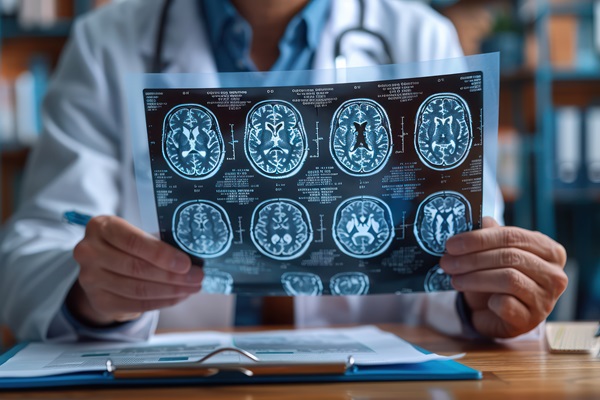
After the initial clinical evaluation, doctors turn to diagnostic imaging to see what's happening inside the skull. The type and timing of these tests depend on the patient's symptoms and the suspected severity of the injury.
CT scans are usually the first imaging test ordered in the emergency room. They're fast, widely available, and effective at detecting life-threatening conditions such as skull fractures, brain hemorrhaging, blood clots, and significant swelling. For example, if a driver strikes their head on the steering wheel, a CT scan can quickly determine whether there's active bleeding that requires emergency intervention.
However, CT scans have a well-documented blind spot. They often miss mild traumatic brain injuries, microscopic damage, and a particularly devastating type of injury called diffuse axonal injury. This is where the brain's connecting nerve fibers are stretched and torn by violent movement inside the skull.
That's where MRI scans come in. Using magnetic fields and radio waves rather than X-rays, MRIs produce far more detailed images of brain tissue. Studies have shown that MRIs detect 10 to 20 percent more injuries than CT scans, making them essential for identifying subtle contusions and axonal damage that CT scans simply can't capture.
In some cases, doctors go even further with advanced imaging techniques:
- Diffusion Tensor Imaging (DTI): an advanced MRI technique that maps the brain's white matter pathways and can reveal torn or damaged nerve fibers invisible on standard scans
- Functional MRI (fMRI): measures brain activity in real time and can identify areas of reduced function after an injury
- PET Scans: examine how brain cells metabolize energy and can detect abnormalities that other imaging misses entirely
Neuropsychological Testing Measures What Scans Can't See
Brain injuries don't just show up on images. They show up in how a person thinks, remembers, processes information, and interacts with the world around them. That's why neuropsychological testing is such an important piece of the diagnostic puzzle.
These tests are administered by a neuropsychologist. They evaluate cognitive functions, including short-term and long-term memory, attention span, processing speed, problem-solving ability, and verbal comprehension.
While a scan shows what the brain looks like, neuropsychological testing shows how the brain actually functions. This is often the gold standard for proving a loss of quality of life, moving a case beyond a simple headache to documenting real-world struggles, such as an inability to manage a checkbook or remember a child’s school schedule.
Why Follow-Up Care Matters More Than Most People Realize
TBI symptoms don't always follow a straight line. Some get better and then suddenly worsen. Others don't appear until days or weeks after the initial injury. That's why ongoing symptom monitoring and follow-up care aren't optional. They're a must for both recovery and maintaining a strong legal case.
Follow-up care often includes repeat CT or MRI scans to track changes, additional neurological evaluations, behavioral and mood assessments, and sleep studies. Prompt diagnosis and ongoing treatment significantly improve long-term outcomes for TBI patients, and gaps in treatment can undermine both health and legal claims. Insurance companies routinely argue that if a victim stopped going to the doctor, the injury must not have been that serious.
Protecting Your Health and Your Legal Rights
Every step of the diagnostic process creates a medical record, and those records form the backbone of any claim involving a brain injury. If you or a loved one has been in a car accident and is experiencing headaches, memory problems, confusion, mood changes, or any other symptoms that don't feel right, don't wait to see if they go away on their own. Seek medical evaluation immediately and follow through on every recommended test and appointment.
The attorneys at Glaser & Ebbs have more than 100 years of combined legal experience standing up to insurance companies that try to downplay brain injury claims. We know how to work alongside medical professionals to make sure every aspect of the injury is properly documented and accounted for. Contact us today for a free consultation, and let our legal team fight for the compensation you and your family deserve.
“They are very helpful, very professional, and polite. They made sure I understood everything that would happen in my case from the beginning to the end.” - T.D., ⭐⭐⭐⭐⭐