
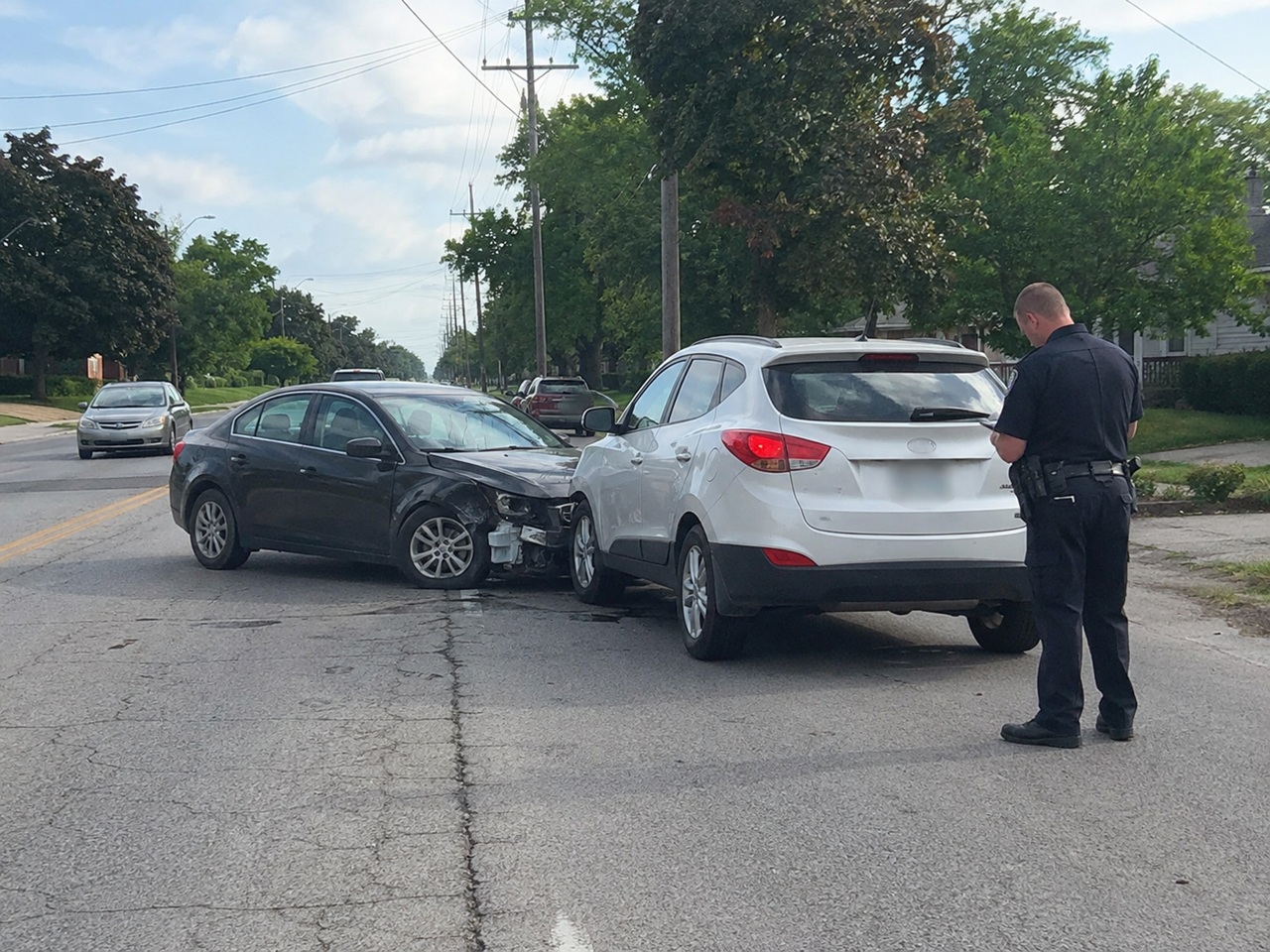
Most Indiana Car Accident Lawsuits Have A Two-Year Deadline, But Other Deadlines Can Come Much Sooner
After a car accident in Indiana, two years is the deadline most people hear about. That's generally how long an injured person has to file a personal injury lawsuit arising from the crash.
But “two years” isn't the whole answer.
An insurance policy may require much earlier notice. A claim involving a city, county, or other political subdivision can trigger a 180-day tort-claim notice requirement. A claim against the State of Indiana generally has a 270-day notice requirement. A child may have additional time for their own injury claim, while a wrongful death case follows a separate statutory rule.
Indiana recorded 200,035 traffic crashes in 2024, according to the Indiana Criminal Justice Institute's 2024 Crash Facts. For people hurt in those collisions, knowing which deadline applies can matter just as much as proving who caused the crash.
Our Fort Wayne car accident lawyers at Glaser & Ebbs have more than 100 years of combined legal experience representing injured people throughout Indiana. One of the first things we look at is which filing, notice, and insurance deadlines apply to the particular accident rather than assuming every claim follows the same two-year calendar.
What Is Indiana's Two-Year Car Accident Lawsuit Deadline?
Indiana Code § 34-11-2-4 provides that an action for injury to a person or personal property generally must be commenced within two years after the cause of action accrues.
For an ordinary car accident in which the injury and its connection to the collision are apparent, that usually means the lawsuit needs to be filed within two years of the crash.
Filing an insurance claim isn't the same thing as filing a car accident lawsuit in Indiana. Negotiating with an insurance adjuster also doesn't automatically preserve the right to sue.
If the statutory deadline arrives while settlement negotiations are still underway and no lawsuit has been properly filed, the defendant can raise the statute of limitations as a defense.
Does A Delayed Diagnosis Give You Two More Years?
Not automatically.
Indiana follows a discovery rule for many tort claims. In Wehling v. Citizens National Bank, the Indiana Supreme Court held that a tort claim generally accrues when the plaintiff knew, or through ordinary diligence could have discovered, that an injury had been sustained because of another person's tortious act.
The important point is that you don't have to know the full extent of the damage before the clock can begin running.
Suppose someone experiences neck pain after a collision and later learns through an MRI that the injury is more serious than originally believed. The later diagnosis doesn't necessarily restart the two-year period simply because the extent of the injury wasn't known on the day of the crash.
The discovery rule can matter when an injury or its connection to another person's conduct genuinely couldn't reasonably have been discovered earlier. It shouldn't be treated as a routine extension for delayed symptoms.
An Insurance Claim Can Have A Different Deadline From A Lawsuit
The statutory two-year period isn't permission to wait two years before contacting an insurance company.
Automobile insurance policies commonly contain notice requirements. The Indiana Department of Insurance advises consumers to report claims as soon as possible because the policy may require notification within a particular period.
Those contractual requirements can matter even when the statute of limitations for the underlying personal injury lawsuit hasn't expired.
That distinction is particularly important when you're seeking benefits under your own policy.
| Type Of Deadline | General Indiana Rule |
|---|---|
| Personal Injury Lawsuit | Generally two years after the cause of action accrues |
| Claim Against A Political Subdivision | Tort-claim notice generally required within 180 days after the loss |
| Claim Against The State | Tort-claim notice generally required within 270 days after the loss |
| Minor's Personal Injury Claim | Legal-disability rules can give the child additional time, subject to important exceptions |
| Wrongful Death | Generally must be commenced by the personal representative within two years of death |
| UM/UIM Insurance Claim | Policy language can impose separate notice or lawsuit requirements |
Do Children Get More Time To File An Indiana Car Accident Claim?
Indiana gives minors additional protection under its legal-disability statute.
Indiana Code § 34-11-6-1 provides that a person who is under a legal disability when the claim accrues may generally bring the action within two years after the disability is removed. Indiana courts recognize minority as a legal disability for this purpose.
That means a child's own ordinary negligence claim can remain viable beyond the two-year anniversary of the accident.
A parent or guardian doesn't have to wait, though. Indiana law allows a parent or guardian to pursue an injury action on behalf of a child while the child is still a minor.
Waiting solely because the child has additional time can create practical problems. Crash-scene evidence disappears, witnesses become harder to locate, vehicles are repaired or destroyed, and medical causation can become harder to reconstruct years later.
The child's extended period also shouldn't be assumed to extend every separate claim belonging to a parent or to override special requirements that may apply when a governmental entity is involved.
What Is The Deadline When A Car Accident Causes A Death?
A fatal crash follows a different statutory framework.
Under Indiana Code § 34-23-1-1, a wrongful death action generally must be commenced by the decedent's personal representative within two years of the death.
The identity of the proper plaintiff matters. Indiana's general wrongful death statute gives the personal representative authority to maintain the action rather than allowing each surviving family member to independently file the lawsuit.
The date of death can also differ from the date of the crash.
If someone survives a collision for several weeks or months before dying from the injuries, the wrongful death period is generally measured from the death. Other claims and deadlines may still need separate analysis.
Depending on the decedent's age, marital status, and dependents, Indiana's general Wrongful Death Act, Adult Wrongful Death Act, or Child Wrongful Death Act can affect which damages and beneficiaries are involved.
Government Vehicle Crashes Can Trigger A Deadline In Months, Not Years
A crash involving government negligence can create one of the most important exceptions to the ordinary timeline.
Examples can include collisions involving:
- A city-owned vehicle;
- A county vehicle;
- A state agency vehicle;
- Certain public transportation vehicles; or
- A dangerous roadway condition for which a governmental entity may potentially be responsible.
Indiana's Tort Claims Act imposes notice requirements before many tort claims against governmental entities can proceed.
Under Indiana Code § 34-13-3-8, a claim against a political subdivision generally requires notice within 180 days after the loss.
Political subdivisions can include cities, towns, counties, and other qualifying local governmental entities.
For a claim against the State of Indiana, Indiana Code § 34-13-3-6 generally requires notice to the Attorney General or the state agency involved within 270 days after the loss.
Those are notice requirements. They're not simply shorter versions of the ordinary statute of limitations.
After a tort claim notice is filed, the governmental entity generally has 90 days to approve or deny it. A claimant ordinarily can't initiate the lawsuit until the claim has been denied in whole or in part.
At the same time, submitting the tort claim notice doesn't give someone unlimited additional time to sue. The underlying limitations period still has to be considered.
Uninsured And Underinsured Motorist Claims Can Have Their Own Timing Rules
A serious Indiana crash can also involve your own automobile insurer.
That can happen when the other driver has no insurance or doesn't carry enough liability coverage to compensate you for the losses caused by the accident.
Uninsured and underinsured motorist claims arise from an insurance contract, and the policy language can matter enormously.
Indiana courts have addressed policies requiring an insured to bring a UM or UIM proceeding within a stated number of years after an accident or to provide written notice within a particular period.
Some contractual limitations are enforceable. Others have been found ambiguous when different provisions of the same policy conflict with one another.
For example, in State Farm Mutual Automobile Insurance Co. v. Jakubowicz, the Indiana Supreme Court considered a policy that imposed a three-year UIM lawsuit deadline while also requiring compliance with other policy conditions. The Court found the provisions ambiguous as applied because of the conflict between them.
The takeaway isn't that every contractual deadline is invalid. It's that a UM or UIM deadline needs to be determined from the actual policy rather than assumed from the ordinary two-year negligence statute.
Does The Deadline Stop If The Other Driver Moves Out Of Indiana?
Don't assume that it does.
Indiana Code § 34-11-4-1 contains a tolling provision addressing nonresident defendants. But the statute itself includes an exception when someone in Indiana can legally accept service of process for that defendant.
Motor vehicle cases have another important wrinkle.
Under Indiana Code § 34-33-3-1, a nonresident who operates a motor vehicle in Indiana is generally treated as having appointed the Indiana Secretary of State as an agent for service of process in a lawsuit arising from that collision.
That statutory service mechanism is one reason an injured person shouldn't assume the limitations period automatically pauses simply because the at-fault driver moved to another state after the crash.
Finding Another Responsible Party Late Doesn't Necessarily Restart The Clock
This can become critical in crashes involving employers, commercial vehicles, contractors, vehicle owners, or other parties who aren't obvious at the scene.
Indiana courts have rejected the idea that the discovery rule automatically keeps a personal injury claim open until the injured person identifies every possible defendant.
In a 2026 Indiana Court of Appeals decision, the court relied on earlier car accident precedent and explained that the discovery rule isn't intended to toll the limitations period until a plaintiff has ideal litigation conditions or discovers every potentially responsible party.
That's another reason early investigation matters.
Employment records, vehicle ownership, electronic data, commercial relationships, and other evidence can reveal parties who weren't listed on the police report but may still bear legal responsibility.
Evidence Has Its Own Deadline Even When The Law Gives You Two Years
A statute of limitations tells you the latest point at which a lawsuit may generally be filed. It doesn't tell a trucking company, business, surveillance-camera owner, or other evidence holder to preserve everything for two years automatically.
Useful evidence can disappear much sooner.
Depending on the accident, that may include:
- Traffic or surveillance video;
- Dashcam footage;
- Vehicle event-data recorder information;
- Cellphone records;
- Witness recollections;
- Photographs of the roadway;
- Commercial driving or employment records; and
- The damaged vehicles themselves.
Taking appropriate steps soon after an Indiana car accident can help preserve evidence while it's still available.
That's why waiting until month 23 simply because a lawsuit may still technically be timely can make an otherwise strong case much harder to prove.
Our Fort Wayne Car Accident Lawyers Can Identify The Deadlines That Apply
A two-year statute of limitations sounds simple until a crash involves a child, a death, a government vehicle, a nonresident driver, an uninsured motorist, an employer, or another potentially responsible party.
Glaser & Ebbs has more than 100 years of combined legal experience handling injury cases throughout Indiana. Our case results include a $1.7 million jury verdict in a car-pedestrian case involving a severely injured child and a $1.075 million settlement for a passenger injured in a single-vehicle crash that required spinal fusion surgery.
If you were injured in a crash in Fort Wayne or elsewhere in Indiana, contact us for a free case evaluation. We'll determine which statutory, governmental, and insurance deadlines may apply and start preserving the evidence needed to protect your claim.
"When my wife had an accident she went this firm within the week. They helped immediately which secured evidence which helped win the case. The lawyer we had is one of the partners. They took a personal close interest in my wife and her welfare throughout the process. We would use this firm again." - Michael H., ⭐⭐⭐⭐⭐